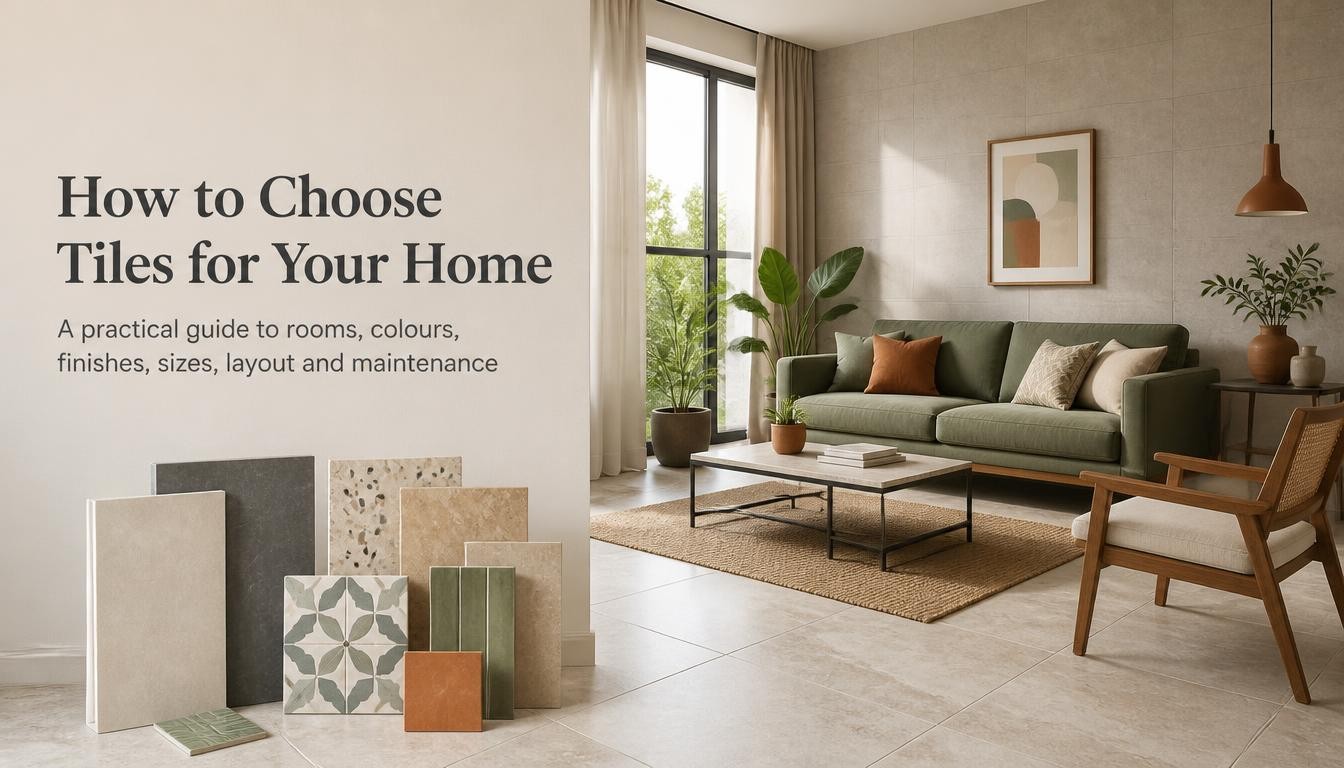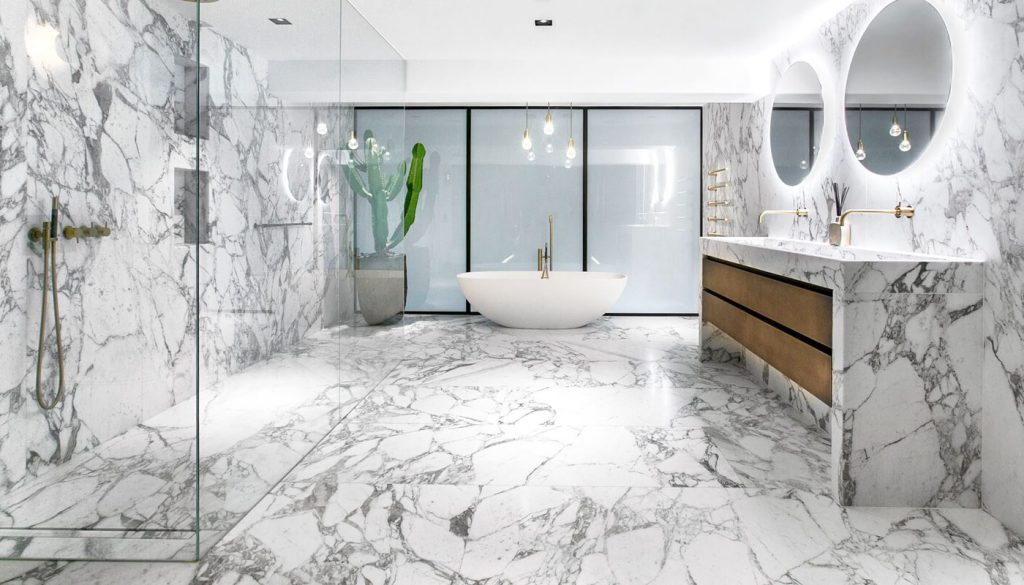

If you are planning a new home or renovating an existing space in Bangalore, start by understanding each room’s needs. Marble selected for a living room floor may not be the most practical choice for a kitchen worktop or a frequently used bathroom.
Starting a home project? Connect with us today to pick the ideal marble for your Space.
Which Type of Marble Is Suitable for Each Area of Your Home?
Start by deciding where you plan to use marble. The right choice depends on how you’ll use the area, how much maintenance you can manage, and the look you want.
Living Room and Bedroom Flooring
For living rooms and bedrooms, consider the overall interior colour scheme, the amount of natural light and the visual effect you want from the floor.
Light-coloured marble can create a bright, open appearance, while darker shades can provide contrast. Natural veins and patterns also affect how the flooring looks across a large area.
Before selecting a slab, ask how it may look when several pieces are installed together. This can help you plan the overall layout.
Kitchen Countertops
Kitchen countertops need careful consideration because they are exposed to food, liquids, cleaning products and regular use.
Marble can be considered for a kitchen worktop, but its suitability depends on your cooking habits and willingness to maintain the surface. Marble is a calcium-based natural stone and can be affected by acidic substances such as lemon juice and vinegar.
Compare maintenance requirements with other materials before deciding. When comparing natural stone surfaces, you can also explore granite options for kitchen countertops.
Bathroom Walls and Other Interior Areas
Marble may be used for bathroom walls, vanity areas and other interior applications. However, consider the surface finish, exposure to water, cleaning requirements, and installation method carefully.
For bathroom flooring, do not choose a marble finish based on appearance alone. Ask the supplier or installer about the suitability of the specific stone and finish for wet areas. Do not assume that every polished, honed or textured surface will perform in the same way.
How Do You Choose the Right Marble Colour and Pattern?
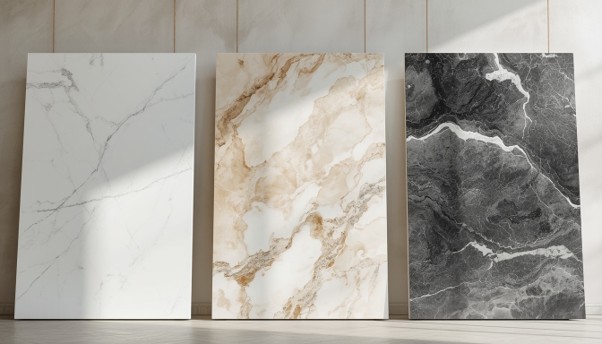
Marble is a natural material, so its colour, veining and pattern can vary from one slab to another. Look at the actual slabs you are considering rather than relying only on small samples or digital photographs.
Consider these factors before deciding:
- Room size: Decide whether you want the floor or wall to blend with the rest of the interior or create a visual contrast.
- Natural light: Check how the marble looks under the room’s lighting conditions.
- Existing colours: Compare the stone with your wall paint, furniture, cabinetry and other finishes.
- Veining: Examine the size, direction and distribution of natural veins across the slab.
- Slab variation: Ask how much the selected material may vary between individual slabs.
If you are choosing marble for a large area, review multiple slabs together where possible. This helps you understand how their natural variations may look when installed.
Avoid selecting marble from a photograph alone. Screen settings, lighting and image editing can affect how a stone’s colour appears.
What Is the Difference Between Polished and Honed Marble?
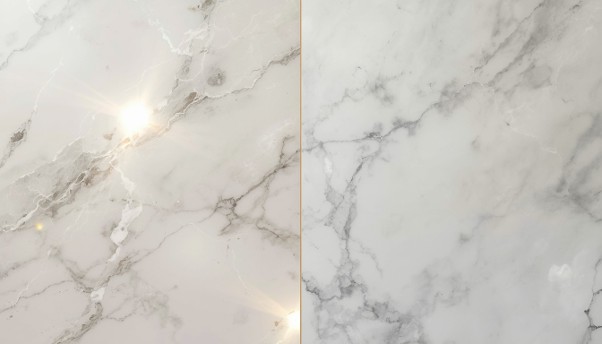
Surface finish affects marble’s appearance and how it needs to be maintained.
| Feature | Polished marble | Honed marble |
| Appearance | Smooth surface with a reflective sheen | Smooth surface with a matte or low-sheen appearance |
| Visual effect | Can make colours and veins appear more pronounced | Can create a softer, less reflective look |
| Marks and maintenance | Etching and scratches may be noticeable depending on the stone and lighting | Some marks may be less visually prominent, but the surface still needs proper care |
| Selection consideration | Consider the desired shine, lighting and intended use | Consider the desired appearance, cleaning needs and intended use |
Neither finish is automatically suitable for every application. Performance depends on the stone, finish, installation, exposure and maintenance.
For areas that may become wet, ask the supplier or installer about the specific finish’s suitability. Do not assume that a matte finish alone guarantees slip resistance.
Browse our marble collection to find options that suit your project.
How Should You Compare Indian and Italian Marble?
Indian and Italian marble are broad origin-based categories, not single stone types with identical characteristics. Colour, veining, appearance, availability and maintenance requirements can differ within each category.
When comparing options, consider the following:
- Appearance: Look at the actual colour, pattern and veining of the specific stone.
- Intended application: Confirm that the selected material is appropriate for the planned use.
- Availability: Check whether enough suitable material is available for the project, including any additional pieces that may be needed.
- Consistency: Review the slabs together to understand natural differences between pieces.
- Maintenance: Ask about cleaning, sealing where applicable, and care requirements for the specific stone.
- Budget: Compare the complete project requirements rather than choosing based on the stone’s origin alone.
Avoid assuming that every Indian marble is more affordable or that every Italian marble has the same appearance or quality. Compare specific options using verified product information.
We invite you to explore our full natural stone collection as you evaluate materials for your design.
What Should You Check Before Buying Marble Slabs?
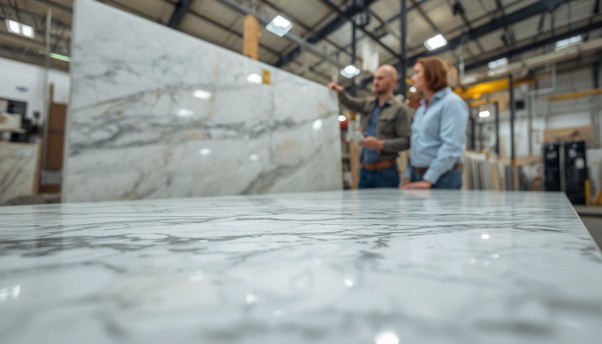
Inspect the actual material before confirming your selection. Natural marble can vary in colour, veining, and appearance. Understanding these variations helps you set realistic expectations for the finished surface.
Use this checklist when reviewing slabs:
- Check the appearance: View the slab under appropriate lighting and compare it with your design requirements.
- Review natural variations: Examine the distribution of veins, colour differences and other visible features.
- Look for visible damage: Check the slab for visible cracks, chips, edge damage or other defects.
- Ask about concerns: If you notice a line or mark that may affect the material’s suitability, ask the supplier or a qualified stone professional to assess it. Not every natural vein is a defect, and a photograph alone may not establish whether a line is structural.
- Confirm dimensions: Check the available slab dimensions and discuss cutting requirements with your fabricator or installer.
- Discuss quantity: Allow the installer or fabricator to estimate the quantity required, taking the layout, cuts and project conditions into account.
- Confirm material details: Ask for the variety, finish and other product details that are available and relevant to your purchase.
Do not rely on a single sample to represent every slab. Where possible, approve the material that will actually be supplied for the project.
How Should You Plan Marble Installation and Maintenance?
Choosing the material is only one part of the process. Installation and ongoing care also affect a marble surface’s appearance and service life.
Before installation, discuss the following with your fabricator or installer:
- Surface preparation: Confirm that the base and supporting surface are suitable for the planned installation.
- Layout and cuts: Review slab placement, visible veins, joints, and cut-outs before work begins.
- Installation materials: Confirm that the adhesives, grout, and other materials are appropriate for the stone and application.
- Sealing requirements: Ask whether the specific marble requires sealing and how often it should be assessed or renewed.
- Cleaning routine: Follow care instructions for the selected stone and finish.
- For routine cleaning, use a soft cloth or mop and a marble-safe cleaner. Avoid acidic cleaners, including vinegar and lemon-based products, because they can etch calcium-based stone. Clean spills promptly and follow the supplier’s care instructions.
- Don’t assume all marble varieties need the same maintenance routine. Confirm recommendations for the specific stone, finish, and application.
What Factors Should You Consider When Planning a Marble Budget?
Instead of comparing marble based on appearance alone, consider the project’s full scope. The overall budget may depend on:
- The selected marble variety and finish
- The quantity required
- Slab dimensions and cutting requirements
- The complexity of the layout
- Fabrication and installation work
- Transportation and handling
- Sealing or other care requirements, where applicable
- Additional material needed for cuts, breakage allowance or future repairs
Request a detailed quotation that separates material and service costs where possible. Confirm what is included before comparing quotations from different suppliers.
This approach helps you assess the total project requirements without relying on general price assumptions that may not apply to your chosen stone or installation.
Why Choose Maheshwari Impex?
When comparing marble suppliers, review the product information, inspect the material, and ask questions about the varieties and finishes you’re considering. Clear information about the selected stone can help you make a more informed decision
Maheshwari Impex provides a place to explore its available stone collections and review options for your project. Before finalising your selection, confirm the specific material, finish, availability and other details relevant to your requirements.
Ready to choose your marble? Speak to an Expert to discuss your requirements.
Conclusion
When choosing marble for your home, consider the intended use, colour, natural pattern, surface finish, maintenance needs, and installation requirements. Inspect the actual slabs wherever possible, and ask the supplier or installer about any concerns before confirming your choice.
Compare specific marble options rather than relying on broad assumptions about origin, price or performance. Careful selection and appropriate installation can help you choose a material that suits your home and project requirements.