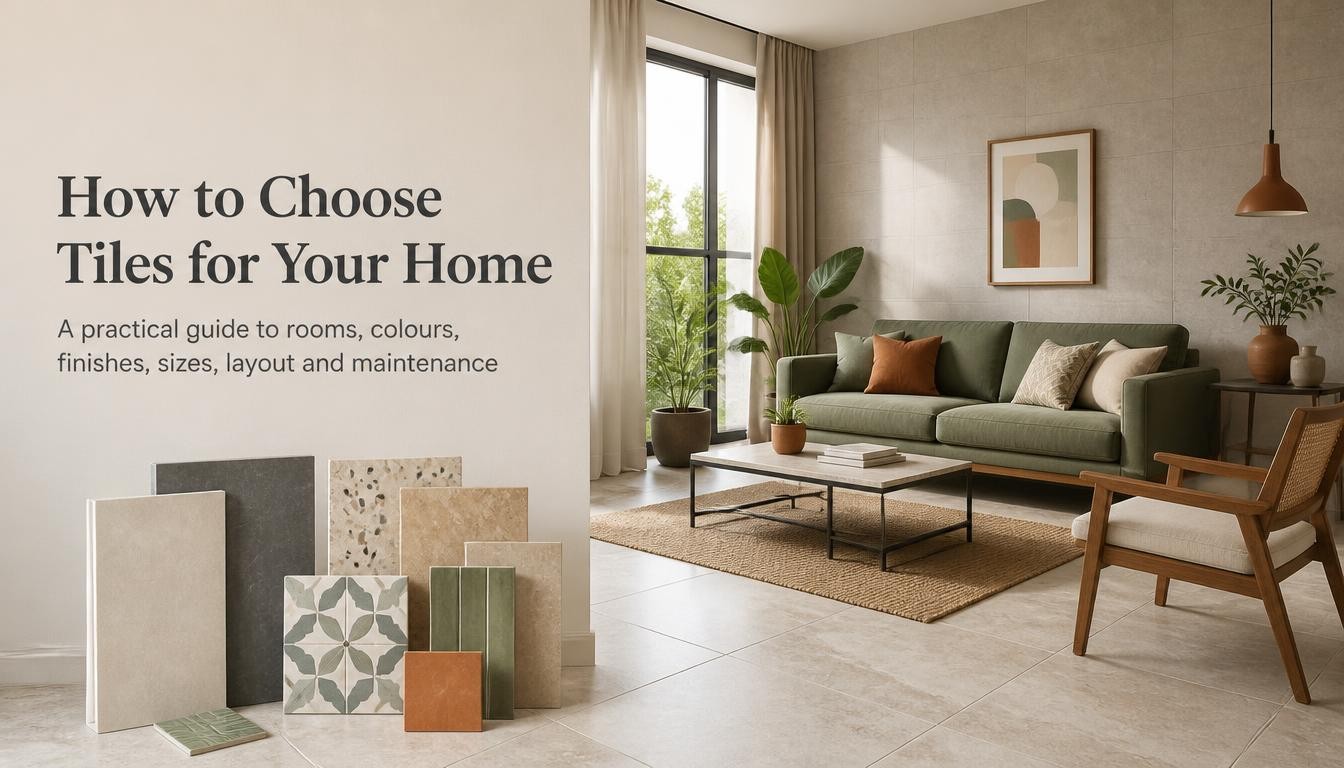
If you are wondering how to choose tiles for your home, start by identifying each room’s practical requirements before comparing designs. This approach helps you narrow down suitable options and select tiles that complement your interiors while meeting everyday needs.
1. Understand the Requirements of Each Room
Different rooms have different flooring and wall-surface requirements. A tile that works well in a living room may not suit a bathroom floor. Consider how each area is used before deciding on the material, finish and design.
Living Room and Bedroom
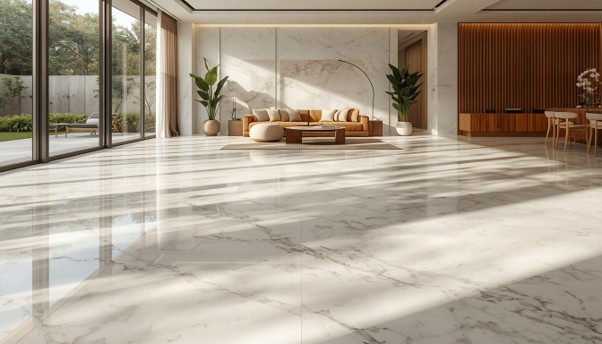
Living rooms and bedrooms benefit from tiles that complement furniture, wall colours and the overall interior theme. Because these spaces are often visually connected, coordinated colours and finishes can create a consistent look.
Consider the following factors:
- Appearance: Neutral colours and subtle patterns suit a wide range of interior styles.
- Size: Larger formats can create a more continuous look by reducing the number of grout lines.
- Maintenance: Choose a surface that’s easy to clean and suits the room’s daily use.
- Interior style: Marble-look, wood-look and understated stone-inspired patterns can complement different furniture styles.
For more options, explore floor tiles from Maheshwari Impex.
Kitchen
Kitchen floors and walls experience different conditions. Floors may face food spills, oil, frequent cleaning, and regular foot traffic, while the wall behind the countertop can get splashes during cooking.
When choosing kitchen tiles, consider:
- A floor finish that offers good grip and is easy to clean.
- A surface that can withstand routine cleaning and everyday use.
- Wall tiles that are easy to wipe down, particularly around the cooking and preparation areas.
- Choose colours and patterns that complement the cabinets, countertop, and flooring.
Avoid selecting a kitchen floor tile based on appearance alone. Check the manufacturer’s recommendations for the intended application and the surface’s suitability for your kitchen’s conditions.
Bathroom
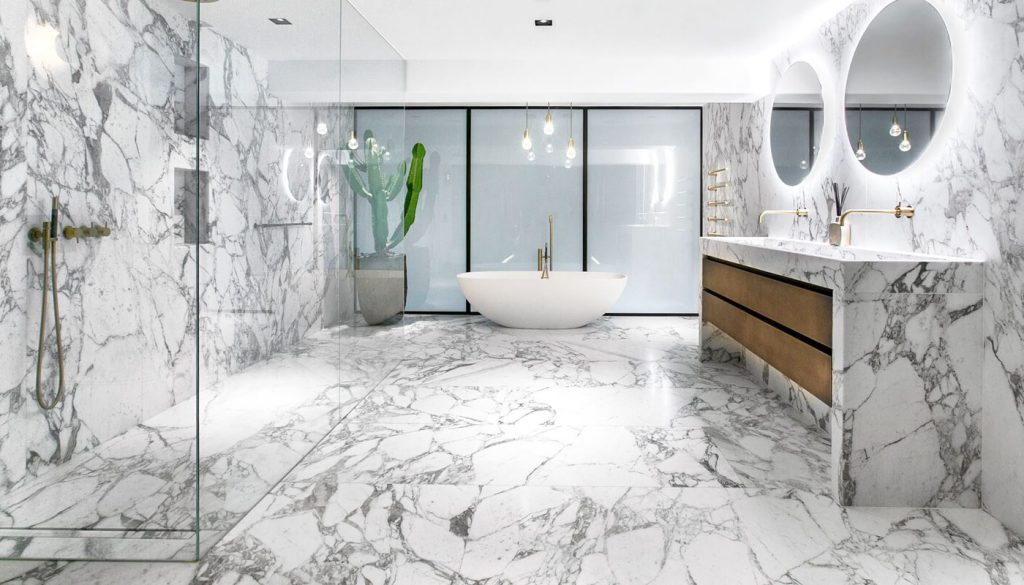
Bathrooms require particular attention to moisture, slip resistance and maintenance. Floor tiles should provide good grip when wet, while wall tiles should suit moisture-exposed surfaces.
Before selecting bathroom tiles, consider:
- Slip resistance: Check the manufacturer’s specifications for wet-area use.
- Surface texture: Choose a finish suited to the moisture level and cleaning required.
- Tile size: Consider the floor layout, slope and drainage requirements.
- Cleaning: Select a surface and grout combination that is practical to maintain.
Explore bathroom tiles from Maheshwari Impex to compare options for bathroom floors and walls.
2. Compare Tile Materials Before Making a Decision
Tile materials differ in appearance, construction, performance and maintenance requirements. Understanding these differences helps you shortlist options according to the room and your preferences.
Vitrified Tiles
Vitrified tiles are commonly used for residential flooring because they come in a wide variety of colours, patterns, and finishes. Their relatively low porosity makes them a practical option for many indoor applications.
They suit living rooms, bedrooms, and other areas when the selected tile matches the intended use. Check the manufacturer’s specifications for slip resistance, wear performance and suitability before choosing a particular product.
Ceramic Tiles
Ceramic tiles come in a wide range of colours, sizes, and decorative designs. They are often used on walls, including kitchen backsplashes and bathroom walls.
When comparing ceramic tiles, check whether the product is intended for wall or floor installation. Don’t assume wall tiles are suitable for flooring, especially where grip and load-bearing performance matter.
Natural Stone and Stone-Look Tiles
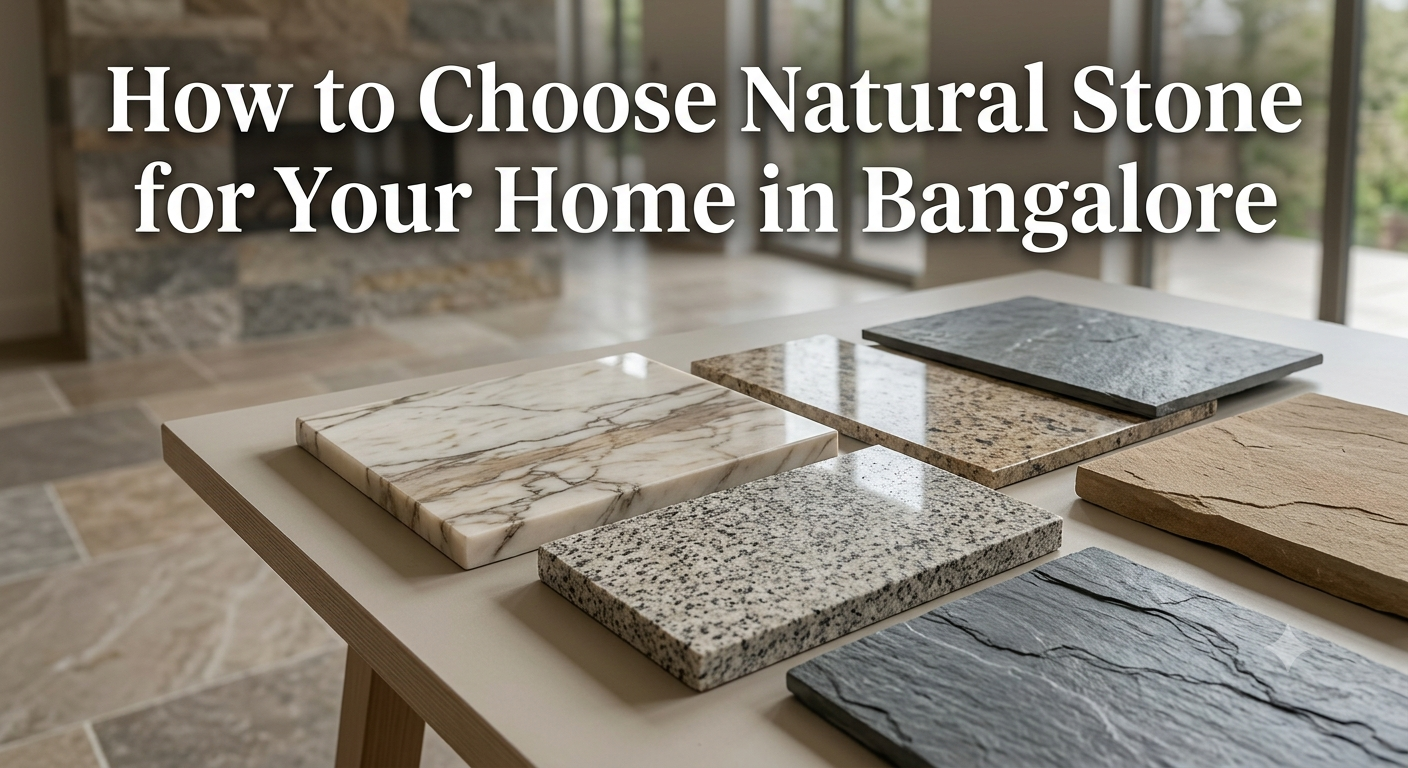
Natural stone offers variations in colour, texture and pattern that give each surface a distinctive appearance. However, maintenance requirements vary by stone type and finish. Some natural stones may require sealing or specific cleaning products.
Stone-look tiles offer an alternative for homeowners who want the look of natural materials. Compare the product specifications and care instructions rather than assuming that natural stone and stone-look tiles require the same maintenance.
Patterned and Handmade Tiles
Patterned tiles can introduce visual interest to a floor, backsplash or feature wall. Handmade tiles may also vary in colour, glaze, texture, and edges, adding to their individual character.
These options can work well in selected areas where the pattern or texture is intended to stand out. Before purchasing, check the product’s recommended application, installation requirements and care instructions.
3. Choose Tile Colours That Suit the Room
Colour affects how a room feels and how well the tiles coordinate with the rest of the interior. To choose tile colours, consider the room’s natural light, wall colour, furniture, and overall design theme.
Light Colours for a Brighter Appearance
White, cream, beige, and light grey tiles can create a bright, open look, especially when paired with good lighting and complementary wall colours.
They work well in compact rooms where a visually continuous surface is preferred. However, the final effect also depends on the tile finish, grout colour, and natural light.
Dark Colours for Contrast
Charcoal, deep grey and other darker shades can create contrast and add definition to an interior. They may work well with light-coloured walls, warm wood tones or minimalist furniture.
Keep in mind that dust, water marks and other everyday traces may be more noticeable on certain dark finishes. Consider the maintenance requirements before you choose.
Coordinate Tiles with Existing Interiors
If you are choosing tiles for an existing home, compare them with the room’s main fixed elements, such as cabinets, countertops, doors, and wall paint.
Explore floor tiles in different colours and designs to find options that complement your furniture, wall colours and interior theme.
For a balanced appearance:
- Choose complementary rather than competing colours.
- Use contrasting shades where you want to define separate areas.
- Limit prominent patterns to one room.
- Check samples under the room’s actual lighting before confirming the purchase.
4. Select a Suitable Tile Finish
The finish influences a tile’s appearance, cleaning requirements and suitability for different applications. Glossy, matte and textured surfaces each have characteristics worth considering.
Glossy Finish
Glossy tiles reflect light and can give walls a bright, polished appearance. People often choose them for decorative walls, kitchen backsplashes, and other areas where a reflective surface suits the design.
On floors, a glossy surface may become slippery when wet. Always check the manufacturer’s guidance before using it in bathrooms, kitchens or other areas exposed to moisture.
Matte Finish
Matte tiles have a less reflective surface and can create a subtle, understated appearance. Depending on the product, they may also make everyday marks less noticeable than some polished surfaces.
For flooring, don’t assume every matte tile is slip-resistant. Review the tile’s technical specifications and whether it suits the intended environment.
Textured Finish
Textured tiles add surface detail and can help create a distinctive look. Some are designed for areas where extra grip matters, while others are primarily decorative.
Choose texture according to the application. Deep textures and uneven surfaces may require more attention during cleaning, so consider both performance and maintenance before buying.
Before choosing a glossy, matte or textured surface, browse the tile collection at Maheshwari Impex to compare available designs and finishes.
5. Consider Tile Size and Layout
Tile size affects a room’s visual balance, the number of grout lines, and installation complexity. The right format depends on the room dimensions, tile design, floor level, drainage and the installation surface.
Large-Format Tiles
Large-format tiles can create a more continuous appearance because fewer grout lines are visible across the surface. They may suit open living areas and other spaces where a clean, uninterrupted look is desired.
However, large tiles require appropriate surface preparation and accurate installation. In smaller or irregularly shaped rooms, the installer should assess cuts, alignment, and the finished layout before purchasing the tiles.
Medium and Small Tiles
Medium-sized tiles are versatile and can suit a range of residential spaces. Smaller tiles may work well for decorative layouts, compact areas and selected bathroom applications.
The best format depends on more than room size. Consider the tile pattern, grout lines, slope requirements and the appearance you want to achieve.
Plan the Layout Before Installation
Before finalising the tile size, ask the installer to assess the room measurements and proposed layout. This helps identify narrow cuts, awkward joins, and areas where the pattern may need alignment.
Plan the grout width and colour at the same time. These details can influence the finished appearance just as much as the tile itself.
6. Use Patterned Tiles with a Clear Design Plan
Patterned tiles can add character to an interior, but their impact depends on where and how you use them. Geometric, floral, terrazzo-inspired and other decorative designs can suit different interior styles.
Consider using patterned tiles for:
- A kitchen backsplash that contrasts with plain cabinets.
- A selected bathroom walls or decorative section.
- An entrance area that creates a visual focal point.
- A feature area that complements simpler flooring or wall finishes.
If the pattern is bold, balance it with simpler surfaces elsewhere in the room. Before installation, check how the pattern repeats across multiple tiles and whether the layout requires alignment at edges and corners.
7. Consider Cleaning and Long-Term Maintenance
Maintenance is an important part of choosing tiles. A surface that looks attractive in a showroom should also suit your home’s cleaning routine and conditions.
Before making a decision, check:
- Cleaning instructions: Confirm which cleaning products are suitable for the tile.
- Stain resistance: Ask about the product’s resistance to common household stains.
- Grout maintenance: Consider grout colour, joint width and the care needed to keep joints clean.
- Surface texture: Assess whether the finish may collect dirt or require additional scrubbing.
- Sealing requirements: If selecting natural stone or another product that requires sealing, follow the manufacturer’s care recommendations.
Use cleaning products recommended for the particular tile and grout. Avoid harsh chemicals or abrasive tools unless the manufacturer confirms they are suitable.
8. Measure the Area and Prepare for Installation
Accurate measurements help you estimate the number of tiles needed and reduce the risk of installation delays.
Measure the length and width of each floor area separately. For walls, calculate the area to be tiled and account for openings such as doors and windows where appropriate. Irregular spaces may need to be measured in smaller sections.
Before ordering, confirm the following:
- Total area: Calculate the floor or wall surface that will be tiled.
- Extra material: Allow additional tiles for cuts, breakage and future repairs. The quantity depends on the layout, tile size and installation conditions; ask the installer to estimate the appropriate allowance.
- Batch consistency: Check that tiles supplied for the same area match in shade and calibre.
- Substrate preparation: Ensure the surface is suitable, stable and properly prepared for installation.
- Adhesive and grout: Select installation materials appropriate for the tile type and location.
- Installation guidance: Confirm the manufacturer’s recommendations for joint spacing, surface preparation and installation.
Planning these details before the work begins can help reduce avoidable waste and improve the consistency of the finished surface.
Why Choose Maheshwari Impex?
Choosing tiles becomes easier when you assess practical requirements before focusing on appearance. Room suitability, material, colour, finish, size, layout, and maintenance all shape the final result.
Take time to compare samples, review manufacturer specifications, and confirm installation requirements before you buy. For homeowners exploring different options, Maheshwari Impex’s tile collection in Bangalore provides a starting point for comparing floor and wall tile designs for different areas of the home.
Explore All Tiles: View the Complete Tile Collection