Unlike manufactured tiles with uniform patterns, natural slate has variations in colour, texture, and surface details. These differences give each installation its own appearance. However, choosing the right slate requires more than selecting a colour. Also consider where it will be installed, how the surface will be used, and what maintenance it needs.
Planning to use natural slate in your project?
Explore the slate stone collection at Maheshwari Impex to review available options for your space.
What Is Slate Stone?
Slate is a fine-grained metamorphic rock formed when clay-rich sedimentary material changes under heat and pressure over geological time. Its layered structure allows it to split into relatively flat sheets.
One of slate’s defining features is its natural cleft surface. Depending on the variety and finish, the stone may have a rough, textured appearance or a more even surface.
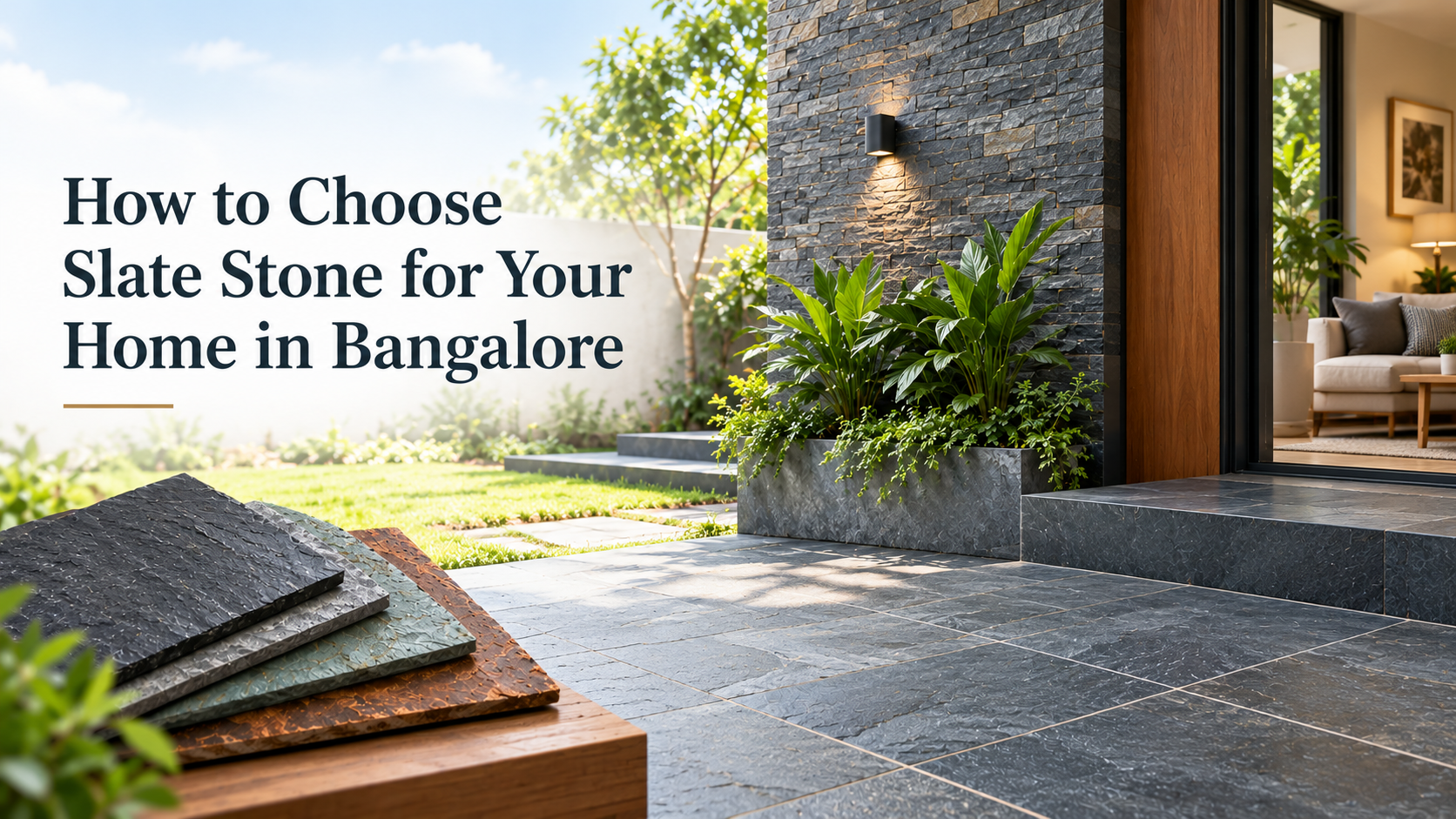
Common slate colours include:
- Black and charcoal grey: Suitable for contemporary interiors and exterior walls.
- Light and medium grey: Useful for understated flooring and architectural features.
- Green: Adds a natural colour variation to selected design schemes.
- Rustic brown and copper tones: Create warmth in outdoor and decorative spaces.
- Multicolour: Combines different earthy shades for a more varied appearance.
The exact colour and texture depend on the slate variety. Reviewing physical samples is helpful before choosing material for a large project.
Where Can You Use Slate Stone?
Slate can be used in several parts of a property, provided the selected variety, thickness, finish, and installation method suit the application.
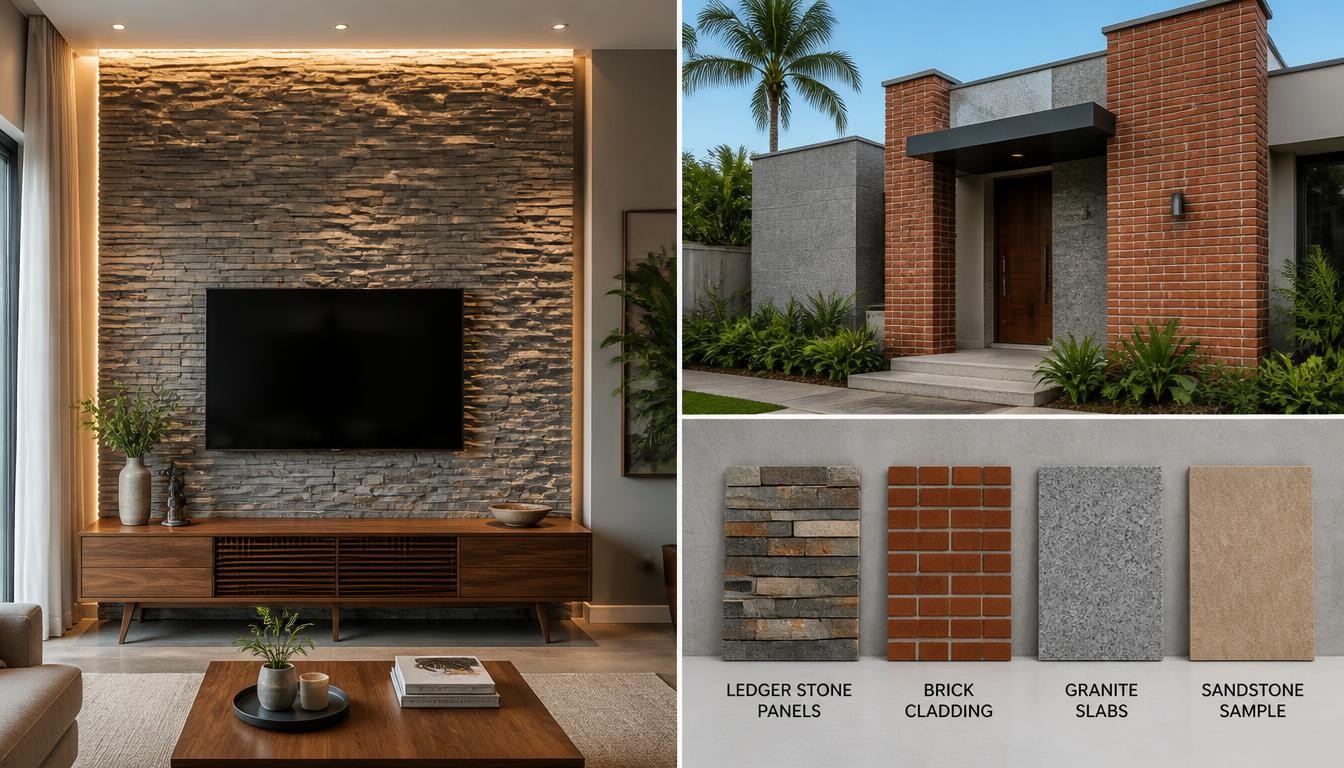
Slate wall cladding adds texture to building façades, entrance walls, balconies, and compound walls. Its natural surface creates shadows and visual depth as light changes throughout the day.
Dark slate can complement white, beige, or light grey exterior finishes. Rustic shades can work well with timber-look surfaces, greenery, and other natural materials.
Explore natural stone wall cladding options for additional material and design choices.
2. Living Room Feature Walls
A slate feature wall can create a focal point behind a television, sofa, or decorative display. Its irregular texture provides visual interest without requiring elaborate patterns or bright colours.
For a balanced interior, combine textured slate with simple furniture, warm lighting, and neutral wall colours. If the room is small, use slate on one wall rather than covering multiple surfaces.
Choose a finish and layout that suits the room’s lighting conditions. Dark slate can look different under natural daylight and warm artificial lighting, so inspect samples in similar conditions.
3. Indoor Flooring
Slate flooring can bring natural texture to living rooms, hallways, entrance areas, and verandahs. Colour variations also help create a distinctive floor without relying on printed patterns.
Before selecting slate for indoor flooring, consider:
- The expected foot traffic.
- Whether the surface is natural, cleft, honed, or another finish.
- How easy the texture will be to clean?
- The level of slip resistance required.
- The stone’s thickness and installation requirements.
A rough surface may provide more grip, but the actual slip performance depends on the specific stone, finish, and conditions. Ask for application-specific guidance, especially in frequently used areas.
4. Bathrooms and Wet Areas
Slate may be suitable for selected bathroom floors and walls. Its natural texture can help when choosing a surface for wet environments, but not every slate variety or finish performs the same way.
Before installation, check water absorption, slip resistance, sealing requirements, and compatibility with the intended cleaning products. Proper waterproofing beneath the stone is also essential.
For shower floors and other areas that stay wet, choose materials based on verified suitability, not appearance alone.
5. Garden Paths and Outdoor Paving
Slate paving can connect garden areas, outdoor seating spaces, patios, and landscaped walkways. Its earthy colours blend with plants, gravel, timber, and other outdoor materials.
For outdoor use in Bangalore, consider rain exposure, drainage, surface grip, and regular foot traffic. Prepare the paving base properly to prevent uneven surfaces and water accumulation.
Select an appropriate outdoor-grade slate and confirm it meets the expected conditions before ordering.
6. Stacking Tiles and Decorative Panels
Slate stacking tiles and ledger panels are commonly used to create textured walls. They can add depth to entrance features, reception areas, outdoor seating walls, and selected interior spaces.
These panels often combine stone pieces with different depths and surface variations. Before installation, check panel dimensions, corner details, fixing requirements, and whether the supporting wall is suitable.
How to Choose the Right Slate for Your Project?
Selecting slate becomes easier when you compare the material against the practical needs of your space.
1. Start with the Application
Decide whether you need slate for flooring, cladding, paving, or a decorative feature. A stone suitable for an indoor accent wall may not suit a frequently wet outdoor floor.
Tell your supplier where the material will be used so that the recommended variety and finish match the application.
2. Compare Colours and Textures
Slate is available in several natural shades and surface finishes. Choose a colour that works with your walls, furniture, landscaping, and other construction materials.
For a modern design, charcoal or grey slate may work well with simple finishes. Brown and multicolour varieties can suit spaces where you want more visible natural variation.
Check multiple samples, as natural stone can vary between pieces and batches.
3. Choose the Appropriate Finish
The finish influences both appearance and everyday use.
- Natural cleft: Retains a more textured, natural appearance.
- Honed: Offers a more even, typically matte surface.
- Other processed finishes: May be available depending on the stone variety.
Do not select a finish based on appearance alone. Consider cleaning, grip, wear, and where it will be installed.
H3: 4. Check Size and Thickness
Tile and panel dimensions affect the finished design, installation time, and material requirements. Larger pieces may create a more continuous look, while smaller formats can suit detailed layouts.
Confirm the required thickness with your supplier and installer. Flooring, exterior paving, and wall cladding can have different technical requirements.
5. Plan for Maintenance
Natural slate may need periodic sealing, depending on its characteristics, finish, and exposure. Ask which sealant is compatible with the selected stone and how frequently it should be reapplied.
Use cleaning products recommended for natural stone. Avoid acidic cleaners unless the supplier confirms they are suitable for the material.
6. Review Samples Before Ordering
Photographs help you compare designs, but they cannot show every variation in natural stone. Inspect physical samples whenever possible.
For a large installation, discuss batch consistency, expected colour variation, wastage, delivery quantities, and replacement availability before confirming your order.
Slate Stone Maintenance Tips
Proper care can help preserve the appearance of slate surfaces.
- Remove dust regularly: Use a soft broom, dust mop, or suitable vacuum attachment.
- Clean with a suitable product: Use a pH-neutral cleaner recommended for natural stone.
- Wipe up spills: Clean spills promptly to reduce the risk of staining.
- Inspect the sealant: Check whether the surface needs resealing according to the product manufacturer’s instructions.
- Keep outdoor areas draining properly: Prevent standing water and remove dirt that accumulates in joints.
- Repair installation issues promptly: Assess loose tiles, damaged grout, or failed joints before the problem spreads.
The maintenance routine will depend on the specific slate and how it is used. Always follow the care instructions provided for the selected material.
Slate Stone Vs Other Natural Stones
Different natural stones offer different appearances and practical characteristics. Compare them according to the intended application.
| Feature | Slate | Granite | Marble |
| Natural appearance | Layered, textured surface | Often granular or crystalline | Often features flowing veins |
| Common applications | Cladding, paving, feature walls | Countertops, flooring, selected outdoor areas | Decorative interiors, flooring, feature walls |
| Finish options | Natural cleft and processed finishes | Polished, honed, textured finishes | Polished, honed, and other finishes |
| Main consideration | Texture, sealing, and application suitability | Finish, staining, and installation requirements | Greater care around acids and staining |
The best choice depends on the intended use, appearance, maintenance expectations, and budget.
You can also compare marble options at Maheshwari Impex when evaluating materials for interior spaces.
Why Choose Maheshwari Impex?
Choosing natural stone involves more than finding a colour you like. You need to understand the material, compare available options, and confirm that the selected product suits your project.
Maheshwari Impex offers a range of natural stone products, including slate, marble, granite, and wall cladding materials. Explore its slate collection for projects involving flooring, exterior surfaces, decorative walls, and landscaping.
When discussing your requirements, share the intended application, approximate area, preferred colour, and installation location. This information helps you narrow down suitable options and clarify material and maintenance requirements before placing an order.
View slates in Bangalore at Maheshwari Impex.
contact the team to discuss your project requirements.
Conclusion
Consider slate when you want a natural stone with distinctive texture and earthy colours. It works well for feature walls, flooring, exterior cladding, garden paths, and decorative panels.
The key is to match the stone variety and finish to the application. Check slip resistance for wet areas, confirm installation requirements, and understand sealing and cleaning needs before purchasing.
By comparing samples and planning for long-term maintenance, you can choose slate that complements your design and meets your space’s practical needs.