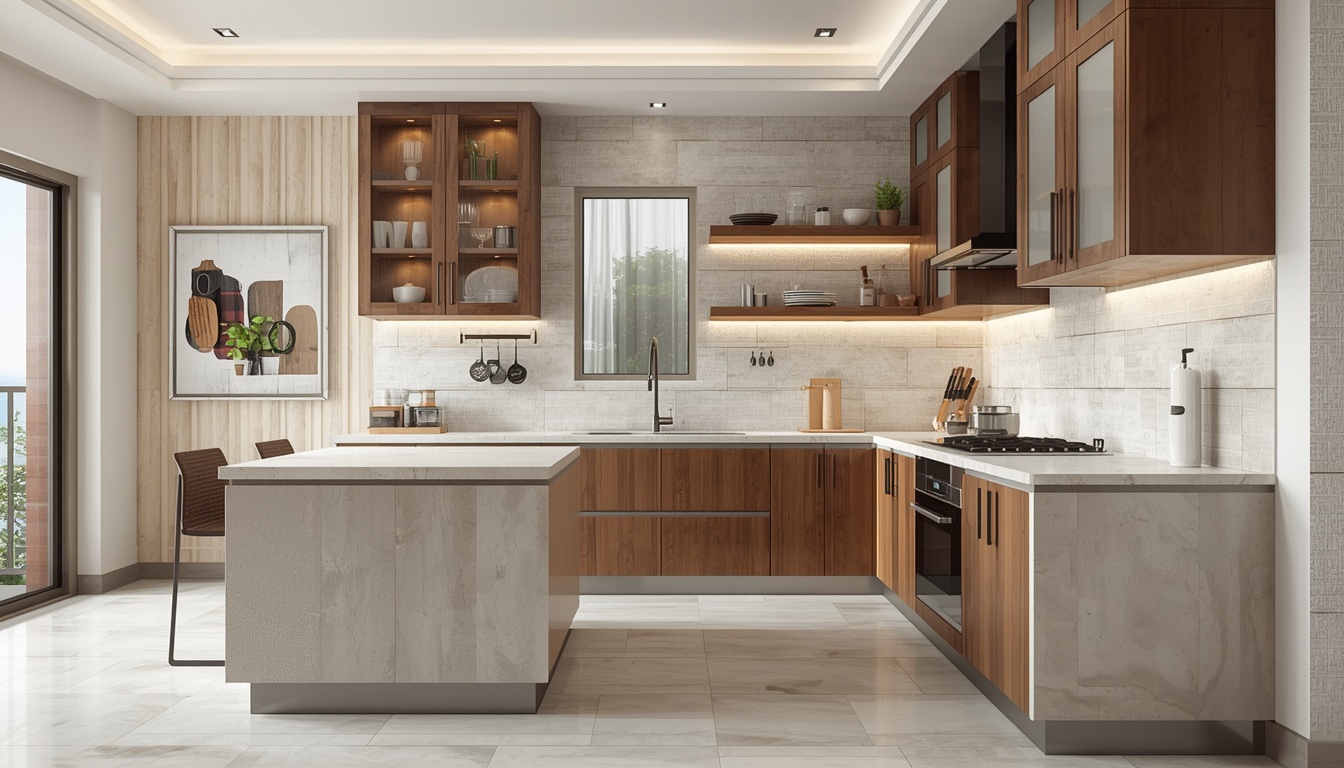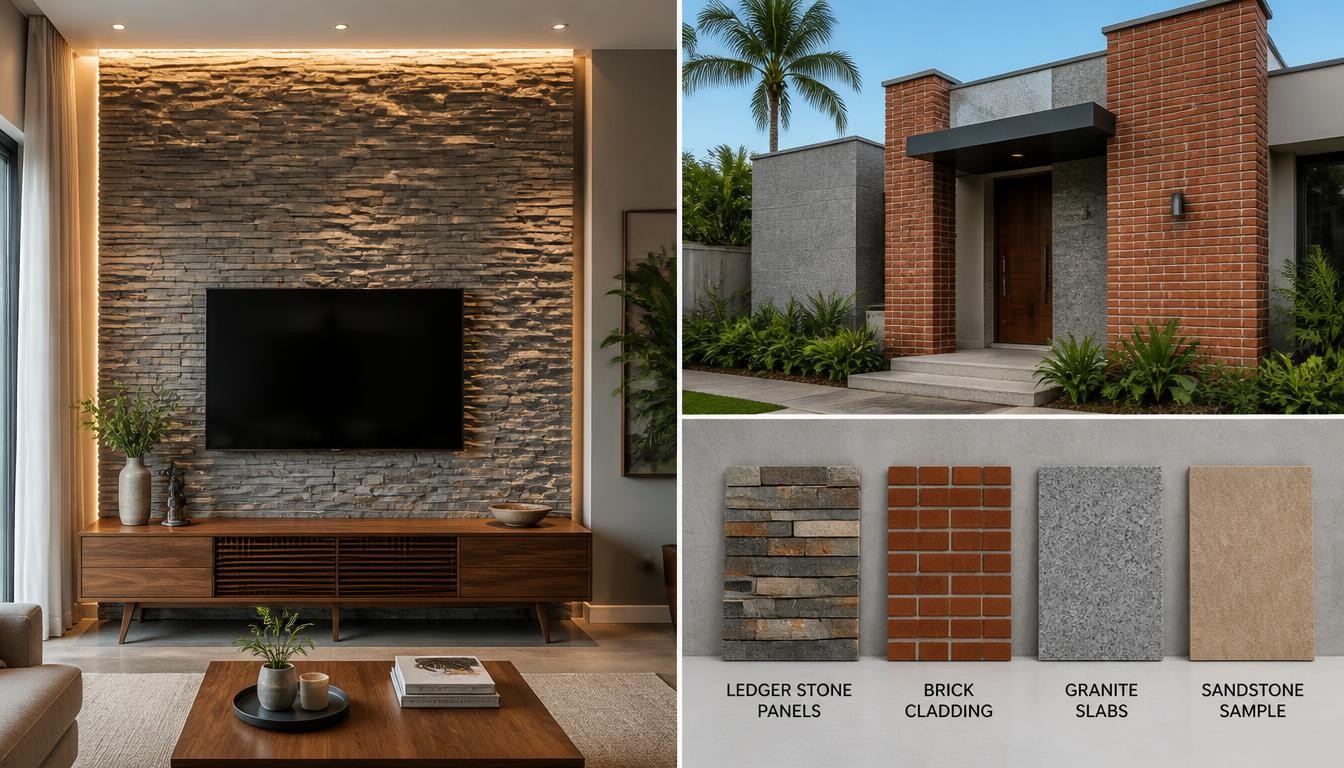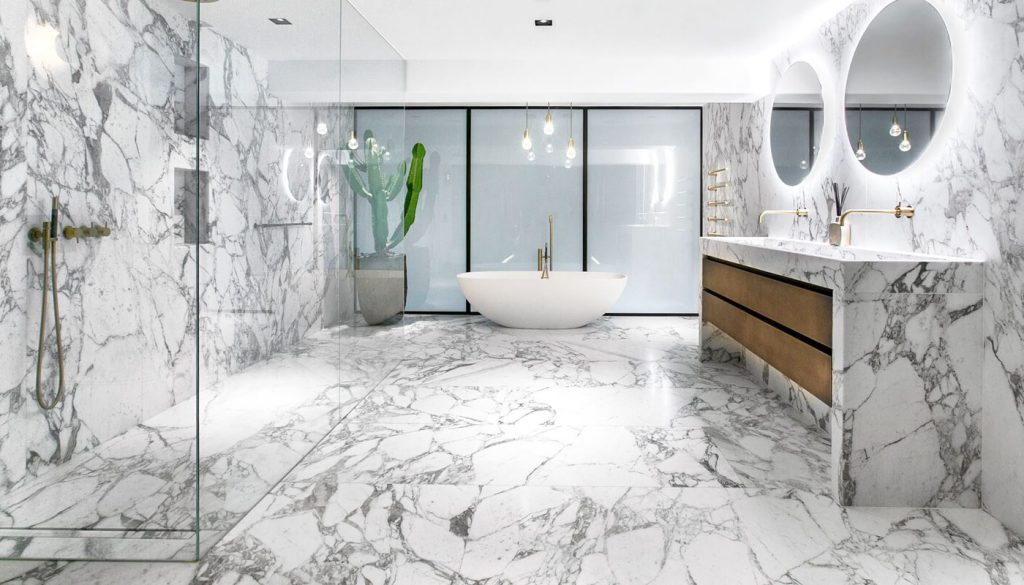
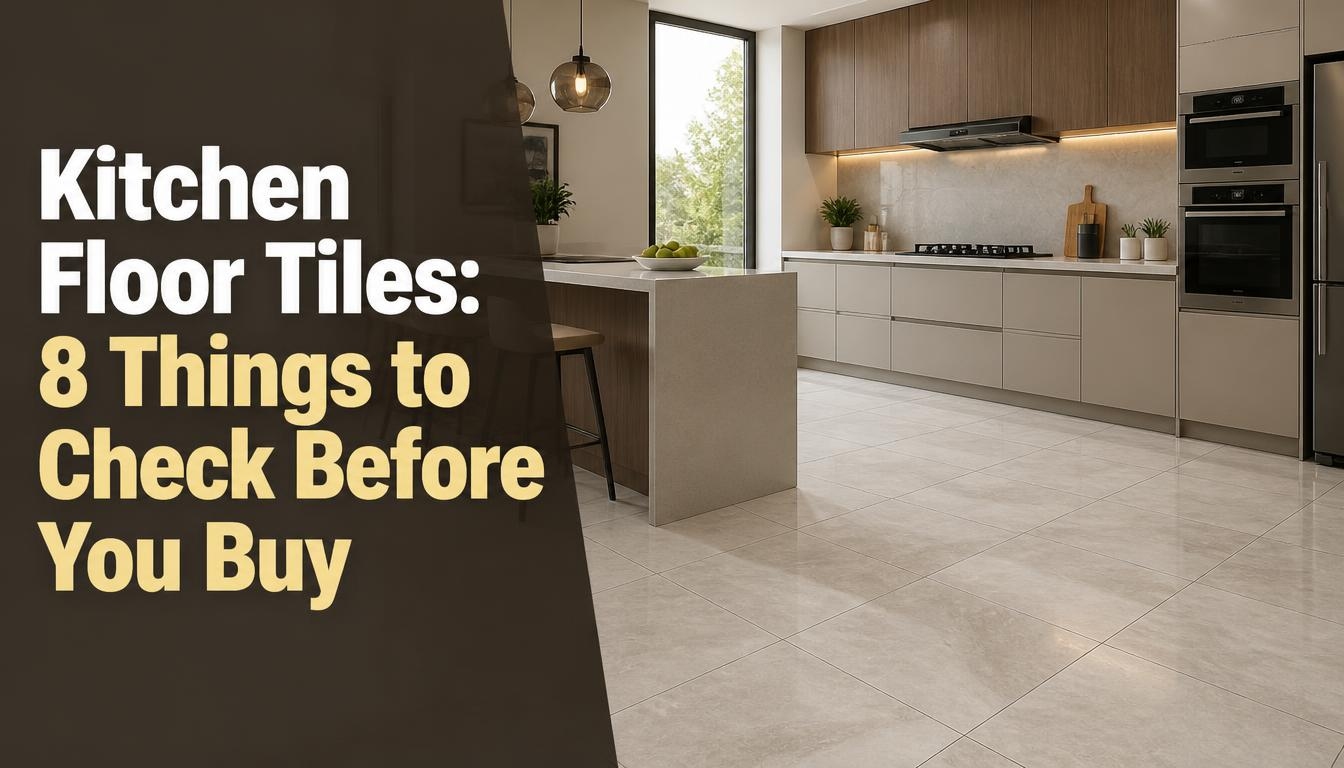
Planning to purchase tiles for your kitchen?
Kitchen flooring also requires careful planning because the floor area may include cabinets, corners, doorways and other fixed elements. Checking product details and inspecting samples before purchasing can help avoid unexpected differences during installation.
This guide explains what to check when purchasing kitchen floor tiles, from technical specifications and batch consistency to sample inspection and order planning.
Contact Maheshwari Impex to discuss your requirements and explore the available collections.
Check Whether the Tile Is Designed for Floor Application
The first step is to confirm that the selected tile is manufactured for flooring. Some tiles are designed specifically for walls, while others are suitable for floor applications. Their appearance alone may not reveal this difference.
Before shortlisting a product, check:
- The manufacturer’s recommended application.
- The product’s technical specifications.
- The recommended installation method.
- Whether the tile is suitable for the expected indoor usage.
If you are comparing different products, ask the supplier for their product information sheets. These documents help you understand the intended application and important technical details.
Choosing a tile based on its recommended use is more reliable than selecting one simply because it looks suitable for the kitchen.
Understand Slip-Resistance Test Information
Kitchen floors may be exposed to water and cooking spills. Therefore, checking the available slip-resistance information is an important part of evaluating a product.
Manufacturers may provide test results or ratings that indicate how a tile performs under specified conditions. However, different testing methods use different procedures, so you should not compare results without understanding the test standard.
Before purchasing, check:
- Whether slip-resistance test information is available.
- Which testing method or standard was used.
- Whether the results apply to wet or dry conditions.
- Whether the product is recommended for the intended kitchen flooring application.
Remember that surface appearance does not establish slip resistance. A matte or textured finish should not automatically be considered slip-resistant.
Ask the supplier for the available test information and select a product based on its intended application. You can also visit the Maheshwari Impex Experience Centre on Sarjapur Road to view available samples and discuss your tile requirements.
Review Water Absorption and Other Technical Specifications
Technical specifications provide useful information about a tile’s physical characteristics. Two products with similar designs may have different specifications, so reviewing these details can help you compare them more effectively.
One important specification is water absorption, which indicates how much water a tile material absorbs under a defined test method.
You should also review:
- Water absorption: Check the manufacturer’s stated absorption value and applicable testing standard.
- Breaking strength: Review the available information about the tile’s resistance to breaking under specified test conditions.
- Dimensions: Confirm the nominal and actual tile measurements.
- Thickness: Check the stated thickness to understand the installation requirements.
- Surface finish: Confirm the specified finish and recommended application.
Not every specification applies in the same way to every tile category. Confirm with the supplier or manufacturer to clarify any unclear technical information before placing an order.
Check Tile Shade, Calibre and Batch Consistency
Shade and calibre are important details when purchasing multiple boxes of tiles for the same kitchen floor.
What Is Tile Shade?
Shade refers to the colour variation between tiles produced during manufacturing. Small differences may occur between production batches, even when the tiles share the same product design.
What Is Tile Calibre?
‘Calibre’ refers to the actual manufactured dimensions of a tile. Manufacturing tolerances can result in slight dimensional differences between production batches.
Why Do These Details Matter?
Using tiles with different shades or dimensions in the same flooring area may create visible variations after installation.
Before ordering, confirm:
- The product name and code.
- The shade identification.
- The calibre or size identification.
- The batch or lot details, where provided.
- Whether all required boxes can be supplied from the same batch.
If you need additional tiles later, matching the original batch may be difficult if the product is no longer available. This is one reason to plan the total quantity carefully before placing an order.
Inspect Tile Samples Before Finalising Your Choice
Photographs and online product images are useful for shortlisting designs, but they may not show every detail of the actual tile.
Inspecting a physical sample can help you understand its appearance and surface characteristics more clearly.
When examining a sample, look at:
- Colour consistency: Check whether the actual shade matches your expectations.
- Surface appearance: Examine the pattern, texture, and finish under different lighting conditions.
- Edges: Look for visible chips or manufacturing irregularities.
- Dimensions: Confirm the stated measurements.
- Pattern variation: Check how the design may appear when multiple tiles are placed together.
If possible, view several tiles together rather than judging the design from a single piece. This gives you a better idea of how the pattern and colour variations may appear across the floor. You can also compare the sample with your kitchen cabinets and countertop to understand how the materials work together.
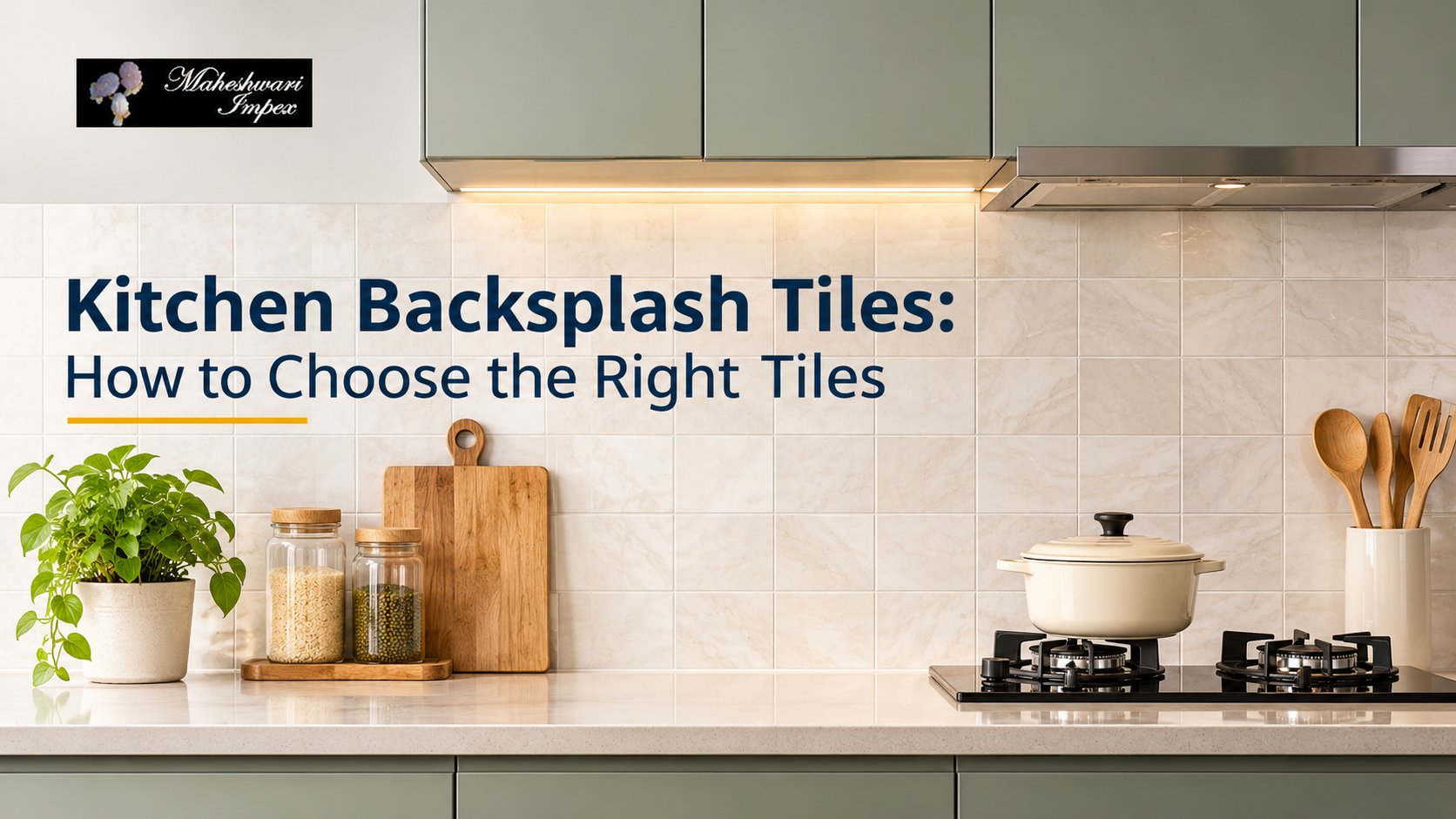
If you are planning to tile the wall behind your kitchen countertop, read our guide to kitchen backsplash tile selection for practical tips.
Calculate the Required Quantity Before Ordering
Accurate quantity planning is important when purchasing kitchen floor tiles. Ordering too few tiles can create difficulties if you need additional material later.
Start by measuring the kitchen floor area.
For a simple rectangular floor:
Floor Area = Length × Width
For example, if the kitchen floor measures 12 feet in length and 10 feet in width:
12 × 10 = 120 square feet.
The total floor area is 120 square feet.
However, the actual tile requirement may be higher because of cutting, breakage and the selected installation pattern.
Consider these factors:
- Total floor area.
- Tile dimensions and coverage per box.
- Areas around cabinets and fixed structures.
- Additional tiles required for cutting and wastage.
- Spare tiles for possible future replacements.
For irregular kitchen layouts, divide the floor into smaller sections and calculate each area separately. Ask your installer to confirm the final quantity based on the proposed layout and cutting requirements.
Confirm Order and Delivery Details
After selecting a product and calculating the quantity, review the order details carefully.
Before confirming your purchase, check the following:
- Product name and product code.
- Selected tile dimensions and thickness.
- Shade and calibre details.
- Number of boxes ordered.
- Total area covered by the order.
- Price and applicable charges.
- Delivery location and expected schedule.
- Availability of additional tiles from the same batch.
When the tiles arrive, inspect the packaging and check for visible damage. Verify the product identification and quantity against the order details.
If you notice damaged boxes, incorrect products or differences in the supplied material, inform the supplier before installation.
Keeping the invoice and product packaging information can also help when checking product details or arranging future purchases.
Confirm Installation Compatibility
The selected tile should be compatible with the floor base and the proposed installation method.
Before installation begins, discuss the following with your contractor:
- Whether the existing floor base is suitable for the selected tiles.
- Whether any surface preparation is required.
- Which adhesive is recommended for the product and substrate.
- What grout type and joint width are appropriate.
- Whether the planned tile arrangement requires additional cutting.
- Whether the installer has reviewed the manufacturer’s instructions.
These checks help ensure that the installation process follows the product’s requirements.
Avoid selecting adhesives or grout based only on general recommendations. Their suitability depends on the tile, substrate, and installation conditions.
Explore our article for more guidance on selecting tiles for kitchen.
Why Choose Maheshwari Impex for Kitchen Floor Tiles?
Maheshwari Impex offers dedicated collections of kitchen tiles, floor tiles, and vitrified tiles in Bangalore. Customers can explore different tile designs, sizes, textures, and finishes based on their space and requirements.
The collections include textured, anti-slip floor tiles and different types of vitrified tiles.
Before placing an order, confirm the product specifications, current stock, pricing, and delivery arrangements with the team.
Explore the collections:
To discuss your requirements, contact Maheshwari Impex.
Conclusion
Purchasing kitchen floor tiles requires careful attention to product specifications, batch consistency, sample appearance, and installation requirements. These checks help you understand what you are buying and reduce the possibility of unexpected differences during the project.
Before placing an order, confirm the product details, calculate the required quantity, and inspect the available samples. Discuss the installation requirements with your contractor and retain the product information for future reference.
A well-planned purchasing process makes it easier to select kitchen floor tiles that meet your project requirements.