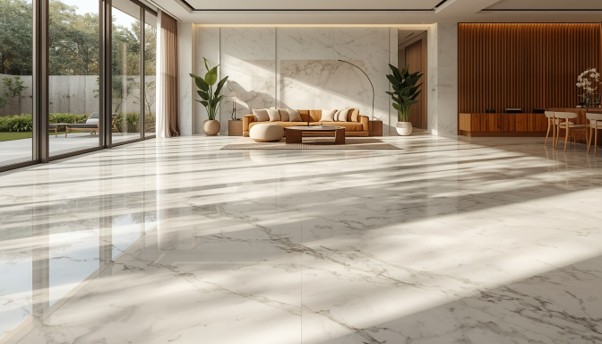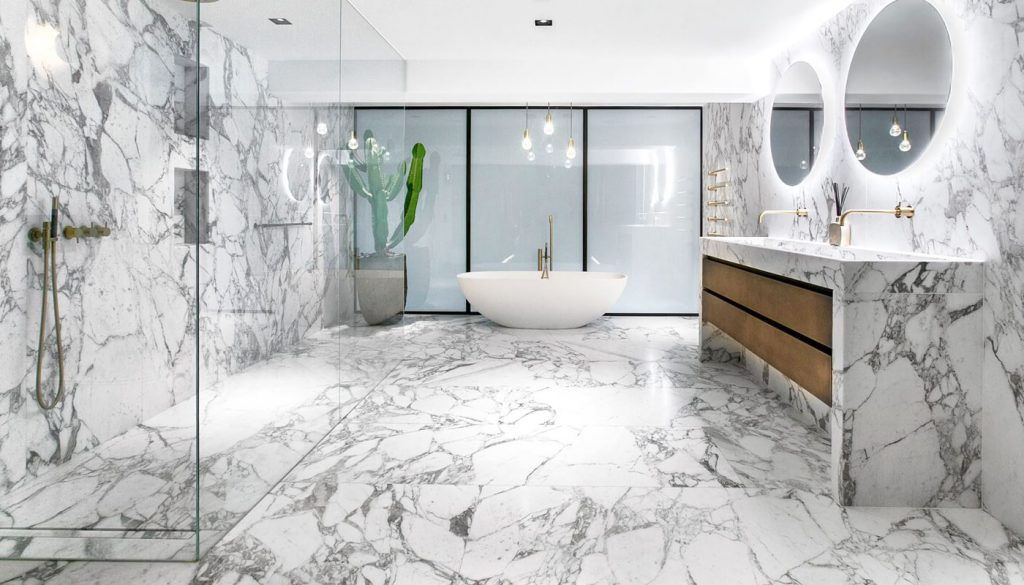

Instead, clean with warm water and a mild soap, or a stone-friendly cleaning solution. Wipe with a soft mop and avoid letting water sit for too long. This gentle routine is enough for daily upkeep and forms the foundation of good Kota stone maintenance.
Have questions about caring for your flooring? Get in touch with us.
Polishing Kota Stone at Home
Light dullness caused by daily footfall can often be rubbed off with a soft cloth and a stone-safe polish. This is a simple part of routine Kota stone care that most households can manage on their own.
However, if the floor has deep scratches or has turned visibly dull over time, do not attempt heavy Kota stone polishing at home. This process needs specialised grinding machines and skilled handling. It is best to call in a professional for restoration work rather than risk damaging the surface further.
Why Kota Stone Flooring is an Eco-Friendly Choice
Kota stone comes directly from the earth and does not require the heavy factory processing that vitrified or ceramic tiles need. This makes it a genuinely sustainable, eco-friendly choice for Indian homes, especially for those looking to build responsibly without compromising strength or style.
Durability and Longevity of Kota Stone
One of the biggest advantages of Kota stone flooring is how it keeps interiors naturally cool, since it does not retain heat the way tiles often do. This can reduce your dependence on fans and air conditioning, especially in warmer Indian climates.
Kota stone does not need complete replacement even if it looks worn out over the years. A professional can grind and re-polish it, restoring it to a near-new finish. This makes proper Kota stone maintenance a long-term investment rather than a recurring flooring expense.
Browse shades and tones to Match Your Interior
Why Choose Maheshwari Impex?
When it comes to sourcing genuine, high-quality Kota stone, working with an experienced supplier makes all the difference. Maheshwari Impex has been in the natural stone business since 2000, bringing decades of hands-on knowledge in sourcing, quality checks, and guiding customers on proper care. Whether you need flooring for a home, office, or commercial project, our long-standing experience helps you choose the right stone and maintain it well for years to come.
Looking for the right Kota stone for your project?
Conclusion
Good Kota stone maintenance does not require complicated routines or harsh chemicals. Regular cleaning with mild solutions, occasional light polishing, and professional restoration when needed are enough to keep your floor performing beautifully for decades. Combined with its natural cooling properties and eco-friendly sourcing, Kota stone remains one of the smartest flooring choices for Indian homes and workspaces.